

 HEAVIER CORRECTION
180 grit · Red
For more demanding oxidation, coating removal or material leveling when a test spot calls for a coarser cut.


Save time and sanding disc cost. Take the work out of surface preparation with a sanding buff that combines the cutting action of sanding discs with the flexibility and control of a buffing wheel.
The semi-flexible J-Weight abrasive strips move across the work surface to level oxidation, pitting, coatings, scratches, and textured areas while producing a more uniform and forgiving finish.
Compared with traditional sandpaper, the open, flexible construction is less prone to loading and helps reduce harsh scratch patterns and uneven pressure—making it easier to transition from sanding into the polishing process.
Ideal for aluminum, stainless steel, and other metal surfaces, sanding buffs are especially effective on truck wheels, water channels, diamond plate, step surfaces, welds, cast aluminum, curved components, and other hard-to-reach areas.
The cutting action can be adjusted through wheel speed and working pressure. Higher wheel speed with lighter pressure produces a more aggressive cutting action, while lower speed with additional pressure allows the abrasive strips to flex more against the surface for smoother blending and contour work.
The use of a grease stick is recommended to add lubrication, reduce heat, and increase cutting power.
Pairing your Sanding Airway Buffs with polishing compounds such as our 539R, Q69, or Wild Cherry will allow for a softer, more refined finish.
These sanding buffs can also be used for removing stubborn surface materials such as paint, tar, adhesives, silicone, and certain protective wheel coatings.
Choose the appropriate grit based on the amount of correction required. Start with a coarser grit for heavier oxidation, pitting, coating removal, or material leveling, then progressively move through finer grits to refine the surface before buffing and polishing. These Sanding Airway Buffs are available in 180, 320, & 600 Grit variants.
These wheels should be used in the range of 1,500 to 2,000RPM. Always operate the wheel within the manufacturer's specified maximum RPM and use the proper mounting hardware and personal protective equipment.
NOTE:
Safety flanges should always be used when mounting a buffing wheel.
Safety Flanges are meant to reduce the chances warping of the center plate of the buffing wheel. In addition to offering protection against warping, Safety Flanges also help to keep the buffing wheel securely in place.
MAKITA 9237C- The best 3,500 RPM polishing machine (PROS & BEGINNERS)
MAKITA GA7021 - The best 6,000 RPM polishing machine (PROS)
We HIGHLY recommend that you use a full face respirator mask! This FULL FACE RESPIRATOR MASK is highly recommended and great quality.
Flexible sanding for hard-to-reach metal
SANDING ACTION. AIRWAY FLEXIBILITY.
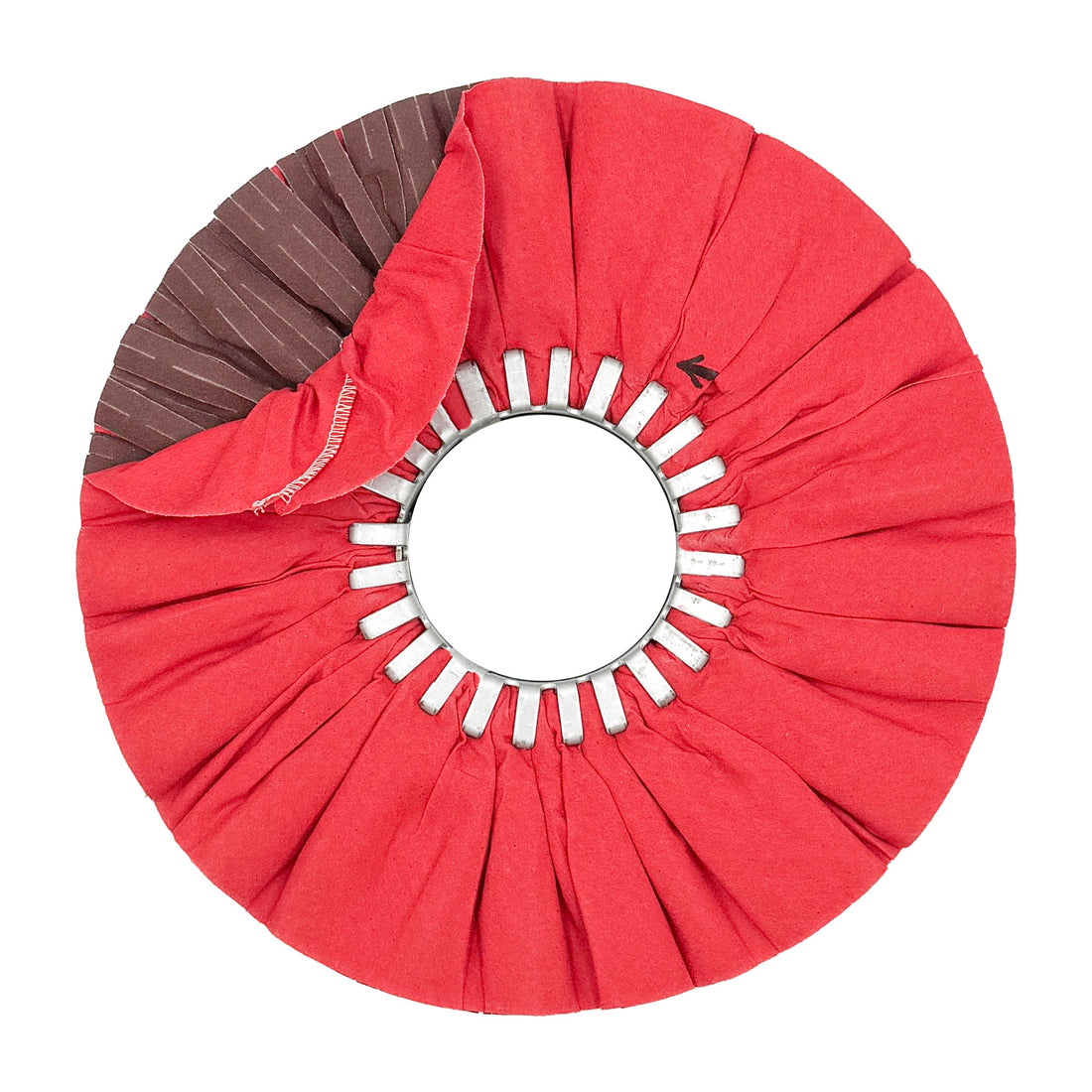
Sanding Airway Buffs combine abrasive cutting action with the flexibility of a buffing wheel. The 12-ply design follows curves, edges and irregular metal surfaces to help make preparation more consistent.
Semi-flexible J-weight abrasive strips work across contoured and uneven areas.
The open construction is less prone to loading and helps reduce harsh scratch patterns and uneven pressure.
Work on oxidation, pitting, scratches, coatings and textured areas before polishing.
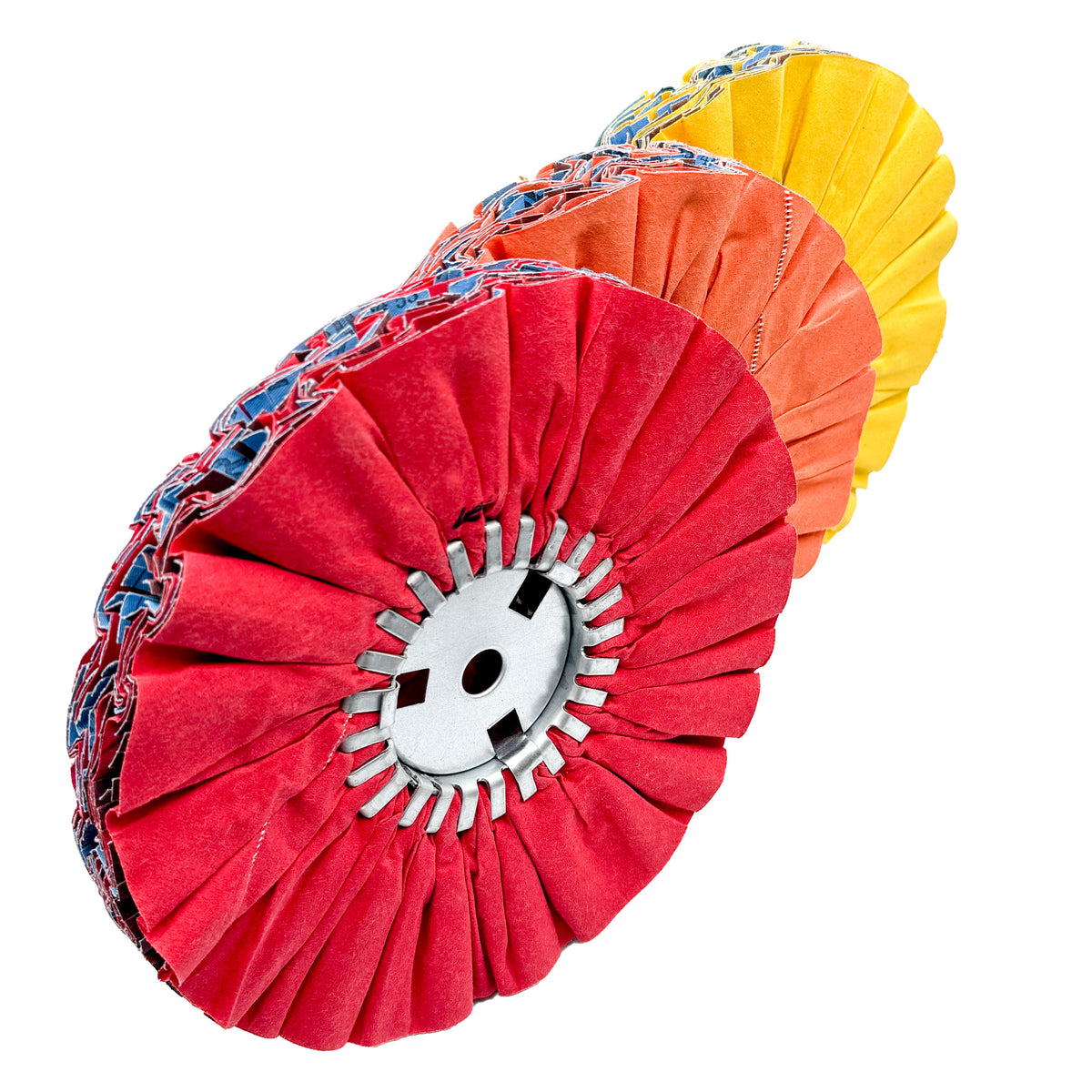
CHOOSE BY GRIT + CORRECTION
Start with the least aggressive grit that removes the defect. Progress finer only after the previous sanding pattern is adequately refined.
HEAVIER CORRECTIONFor more demanding oxidation, coating removal or material leveling when a test spot calls for a coarser cut.
 SURFACE PREPARATION
A starting point in the product's recommended prep sequence when appropriate for the surface condition.
 FINER REFINEMENT
Refine the surface after the preceding sanding stage to prepare for the next finishing step.
The grit controls the cut. Color identifies these sanding wheel options; it does not follow the metal-specific color system used for standard Airway Buffing Wheels.
SIZE + MOUNTING GUIDE
The smallest available diameter for a setup suited to more restricted access.
The middle diameter option for a compatible tool and working area.
The largest diameter option. Confirm tool clearance, mounting and the wheel's rated speed.
Select the plated version when it matches your mounting system.
Select the open-center version when it matches your mounting system.
Use proper mounting hardware and safety flanges. Check the selected wheel's specifications and tool compatibility before use.
THE SURFACE-PREP SEQUENCE
Clean the surface. Choose the grit that corrects it with the least unnecessary material removal.
Work evenly across suitable bare metal, following the contours without forcing the wheel.
Move through appropriate finer abrasives. The product guidance uses 320 J, then 600 J.
Remove the sanding buff and use a suitable polishing wheel and compound for the metal.
After 320 J and 600 J preparation, the product guidance recommends additional passes with 600- or 800-grit sandpaper on a suitable speed sander or DA to further refine the surface.
Inspect the 600 J finish and confirm that the next wheel and compound can remove the remaining sanding pattern. Add refinement whenever the surface requires it.
SANDING WHEEL OPERATING SPEED
Always stay within the selected wheel's marked maximum and the tool and hardware ratings. Speeds mentioned for later polishing stages do not authorize running this sanding buff at those speeds.
Adjust pressure and speed only within the permitted range. The product recommends a grease stick for lubrication, reduced heat and improved cutting action.
Use safety flanges and proper mounting hardware. Wear suitable eye, face, hearing and respiratory protection and follow the wheel and tool manufacturers' instructions.
BUILT FOR COMPLEX METAL SURFACES
Also suited to removing stubborn paint, tar, adhesives, silicone and certain protective wheel coatings where removal is intended. Test first; sanding removes material.
SANDING AIRWAY BUFFS FAQ
These wheels contain abrasive strips for sanding and surface preparation. Standard Airway Buffing Wheels use matched fabric treatments and compounds for the later polishing stages.
Choose 180 for heavier correction when needed, 320 for preparation, and 600 for finer refinement. Test the least aggressive suitable option first and build a sequence around the actual surface condition.
The product guidance lists 539R, Q69 and Wild Cherry for a softer, more refined finish, and recommends a grease stick for lubrication. Follow the abrasive and compound instructions for your application.
The stated operating range for this sanding product is 1,500–2,000 RPM. Use a compatible tool that can operate within the wheel's permitted range, and never exceed its marked maximum rating.
No. Use the purchase options to choose the size, grit and center plate configuration you need. Availability is shown for the selected option.
PREP FOR THE NEXT STAGE
Overall rating: 5.0 / 5 from 2 reviews.
Review topics: [].
"These sanding buffs are amazing they last way longer than the infused nylon disks and are consistent and flat if you haven't got them your missing out. please make one in 180 grit would complete the set up. da in-between"
"Great products as usual!"
 United States
|
USD
$
You are currently shipping to United States and your order will be billed in USD $.


